The Dance Factory presents
Dada Masilo’s Hamlet
Sadler’s Wells
Choreographed by: Dada Masilo
Composed by: Thuthuka Sibisi
Produced by Khameleon Kreatives and co-produced by Sadler’s Wells
In 2024, renowned South African choreographer and dancer, Dada Masilo, premiered her reimagined Hamlet in Vienna. Known for her inventive adaptations of classical ballets (Giselle, Romeo and Juliet etc), Masilo explored the bounds of storytelling through movement and dance to much critical acclaim. Masilo sadly passed away in 2024, but longtime collaborator and tutor, Suzette Le Sueur, has reignited the work in honour of Masilo and the piece now has its UK premiere at Sadler’s Wells, London.
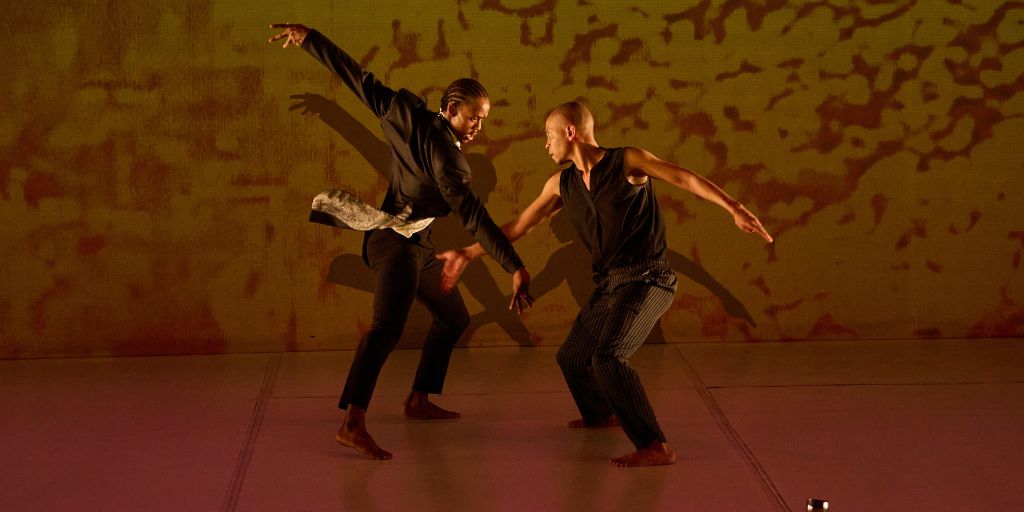
In this production of Hamlet, the narrative is described as being seen through the lens of Ophelia – Hamlet’s lover who descends into madness – and yet, as the lights went down and actor Aphiwe Dike came on stage, it was Hamlet’s voice we heard first. Throughout the piece, there were interjections of speeches from Hamlet, notably ‘To be or not to be’ and ‘O, that this too too solid flesh would melt’. At times, it felt the speeches were used as signposts helping the audience sense which part of the story they had reached, but too often they felt unnecessary, jarring the pace of the movement and missing opportunities to use dance to convey the narrative. Hamlet’s voice continued to be the most prominent throughout, however there were some moving moments between Ophelia and Gertrude, in which the dancers (Lehlohonolo Madise and Llewellyn Mnguni respectively), were able to portray the grief and anger that enshrouds them at the hands of the men in the story. There were also times in which only the women were left onstage; moments where their voices could be seen physically represented, processing all that happens within the narrative.
Dada Masilo’s choreography combines elements of classical ballet, contemporary dance and African dance, compiling artists who bring a variety of styles and techniques to the piece. At times, the dancing wasn’t as neat or in sync as it perhaps could have been, yet there was clearly a lot of joy on stage and despite the tragic circumstances of the piece itself, the performers were able to flesh out the moments of fun and comedy.
Technically the piece was simple, with no set, only a projector screen at the back that used slightly blurry images to signify locations, and very few props. Sound was used effectively throughout, not only underscoring the dance (music composed by Thuthuka Sibisi) but using African drumming, classical music, church organs and poetry to enhance the sensations and atmosphere invoked by the story.
New performance pieces often look to fill a gap, whether that’s in performance style, ways of storytelling, or the narratives told, and this production could have, but perhaps Hamlet was too ambitious a piece. It could certainly have gone further in its story-telling, characterisation and focus on the women’s voices, and considering the piece only runs at one hour, it’s a whirlwind overview of Hamlet. Ophelia says “we know what we are, but know not what we may be”, reminding us of the endless opportunities available to reinvent, adapt and grow stories with new energies and focuses; something Dada Masilo
certainly strove to do throughout her career and continues to do through her legacy.
Dada Masilo’s Hamlet runs at Sadler’s Wells, London until Tuesday 26th May
Reviewed by Lily Sitzia
Photo: Lauge Sorensen